LinguaBoost Lab EXAM LAB
Catalog B1+

Stage vs Screen — live performance in the age of social media · B1+ Exam Lab · Speaking Task 4 focus
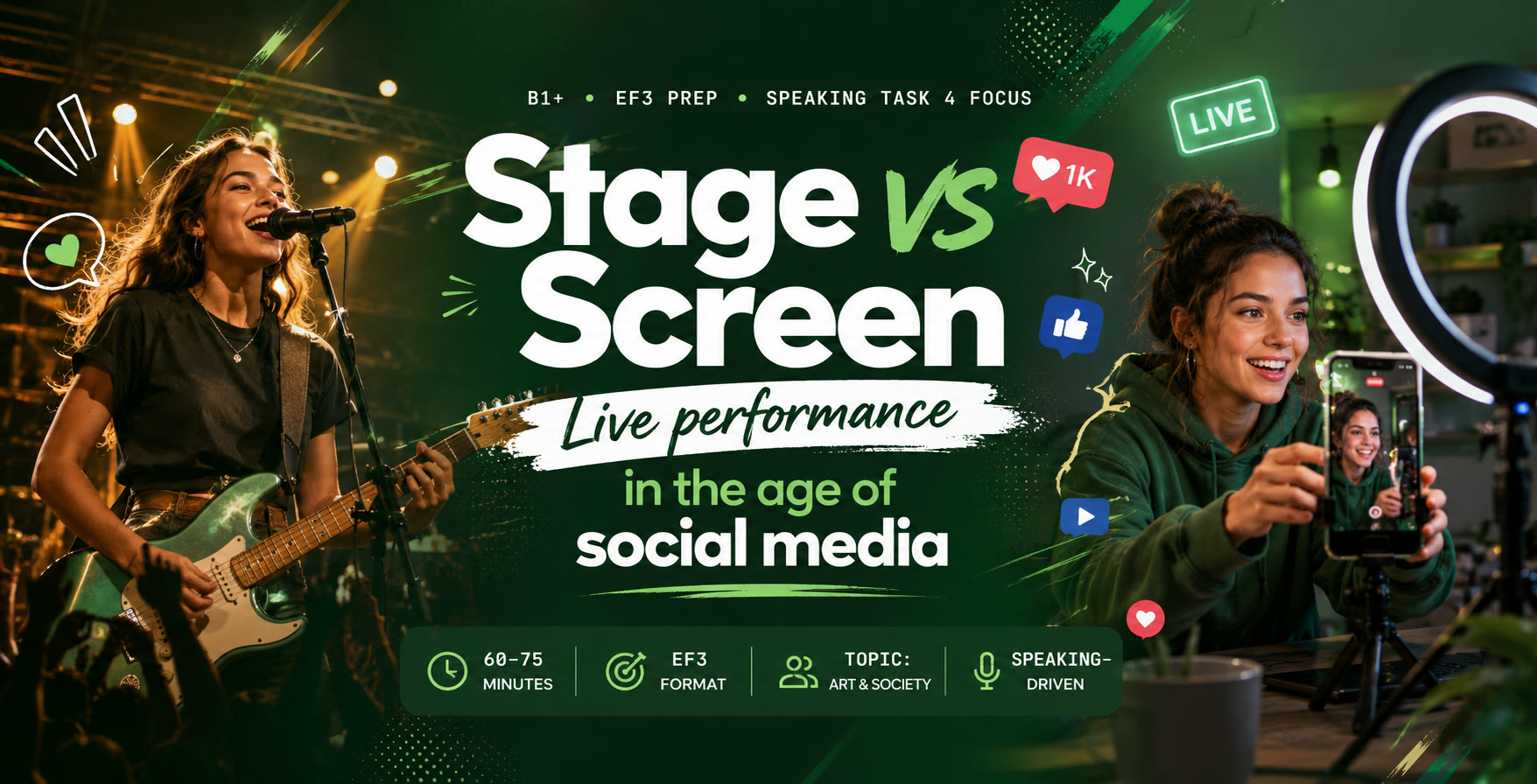
Stage vs Screen — live performance in the age of social media. Lesson banner: a young woman singing on stage with a guitar on the left, a young woman filming herself with a ring light on the right, green palette with chips: 60-75 minutes, EF3 format, Topic Art and Society, Speaking-driven
1

Warm-up · Where do today's artists live?Listening + Speaking

Get into the topic · 3 quick questions before we open the toolbox
Tap to hear, then say your answer aloud (no "right" — just speak):
Where do you think today's young artists really live — on a stage or on a screen?
Have you ever performed in front of a real audience? How did it feel?
Would you rather have 1 000 followers online, or 50 fans at a live show? Why?

💡 Use full sentences with «I think…», «In my opinion…», «Personally, I…» — the same registers you need for Task 3 & 4.

2

Topic Vocabulary · B2+ collocationsLexical Resource

18 words you'll use in Task 4 · tap a card to flip · then click 🔊 to hear

First — read & flip — make sure you can use each word in a sentence:

Collocations to steal for Task 4

perform live gain followers build a fanbase go viral break into the mainstream behind the scenes opening night stand out from the crowd stay authentic deal with stage fright

Quick check — fill the blank (drop-down):

1. Many young dancers followers by posting short rehearsal clips.

2. It takes years to build a loyal in the offline world.

3. Live performers often have to deal with right before the show.

4. Some artists refuse to the mainstream to stay authentic.

5. The most viral clips on TikTok often come from the most creators.

6. After ten years of , the choreographer was ready to launch her own production.

7. Critics praised her for her — she stayed true to her style despite the trends.

8. A unique signature helps a young dancer stand from the crowd at any audition.

9. Smart content creators understand that matters more than follower count.

10. After her final solo, she received a standing from the audience.

3

Word Formation · word-building drillWord Formation drill

12 items · type the right form · root word is on the right · 💡 «Show» reveals the answer

Right form = right ending. Watch for: spelling (simple → simplicity, NOT simplisity), part of speech (noun? adjective? verb?), positive/negative prefix (un-, dis-, im-, in-, ir-). 6 баллов на экзамене — каждое слово 1 балл, ошибка в орфографии = 0.

4

Reading mini · The TikTok Dance GenerationReading + Vocab

Short text · 4 MC + 2 T/F · vocabulary in context

Ten years ago, a serious dancer's path was clear: years of rehearsal, ruthless auditions, and a hope that one day you'd see your name on an opening-night programme. Today, that path is no longer the only one — and for many teenagers, it isn't even the obvious one.

Sixteen-year-old Lera from Saint Petersburg has never been to a casting call. Yet, her short clips of contemporary choreography have been watched over three million times. «I post once a week,» she says, «but I rehearse every day. The difference is — my audience is the phone, not the theatre.»

Critics worry that this shift produces a generation of dancers who can deliver a brilliant fifteen-second hook but can't sustain a full ninety-minute performance. Defenders reply that visibility is what matters — and a smartphone gives more visibility in a month than a regional theatre could give in a decade.

Lera herself is more cautious. «If I had to choose one thing forever, I'd choose the stage. Online, you go viral and you're forgotten in a week. On stage, people remember you for years.» She pauses. «But for now — I take both.»

Comprehension · choose the best option

1. According to the text, the «traditional» path for a serious dancer used to be…
2. Lera describes the smartphone as…
3. Critics of the new generation say that young dancers…
4. Lera's own position is best described as…

True / False / Not stated

5. Lera has been to many casting calls.
6. Lera earns money from her online videos.
5

Grammar focus · Wishes & ConditionalsGrammar drill

On the theme of stage life · type the right form into each gap

Wish + Past Simple — for a present regret. «I wish I had more time to rehearse.»
Wish + Past Perfect — for a past regret. «I wish I had auditioned last year.»
2nd Conditional — present unreal. «If she were more confident, she'd post more.»
3rd Conditional — past unreal. «If I had uploaded earlier, it would have gone viral.»

Fill the gaps

1. I wish I more rehearsal time before opening night. (present regret · have)

2. If she a little more confident on stage, she a lot more followers. (present unreal · be / gain)

3. I wish I that performance video sooner — now everyone has moved on. (past regret · upload)

4. If I for the school musical, I would never have discovered my passion. (past unreal · not audition)

5. He wishes he perform in front of a real audience instead of a phone camera. (wish + could · ability)

6. If they her earlier, she it to the national stage by now. (3rd cond · support / make)

7. If only I so nervous before going live — it ruins my voice. (if only · be · negative)

8. I wish my parents how much dance matters to me. (present regret · understand)

6

Speaking Task 3 · Describe ONE photo1.5 min prep · 2 min talk

5-point plan · talk for 2 minutes · don't stop · use linkers
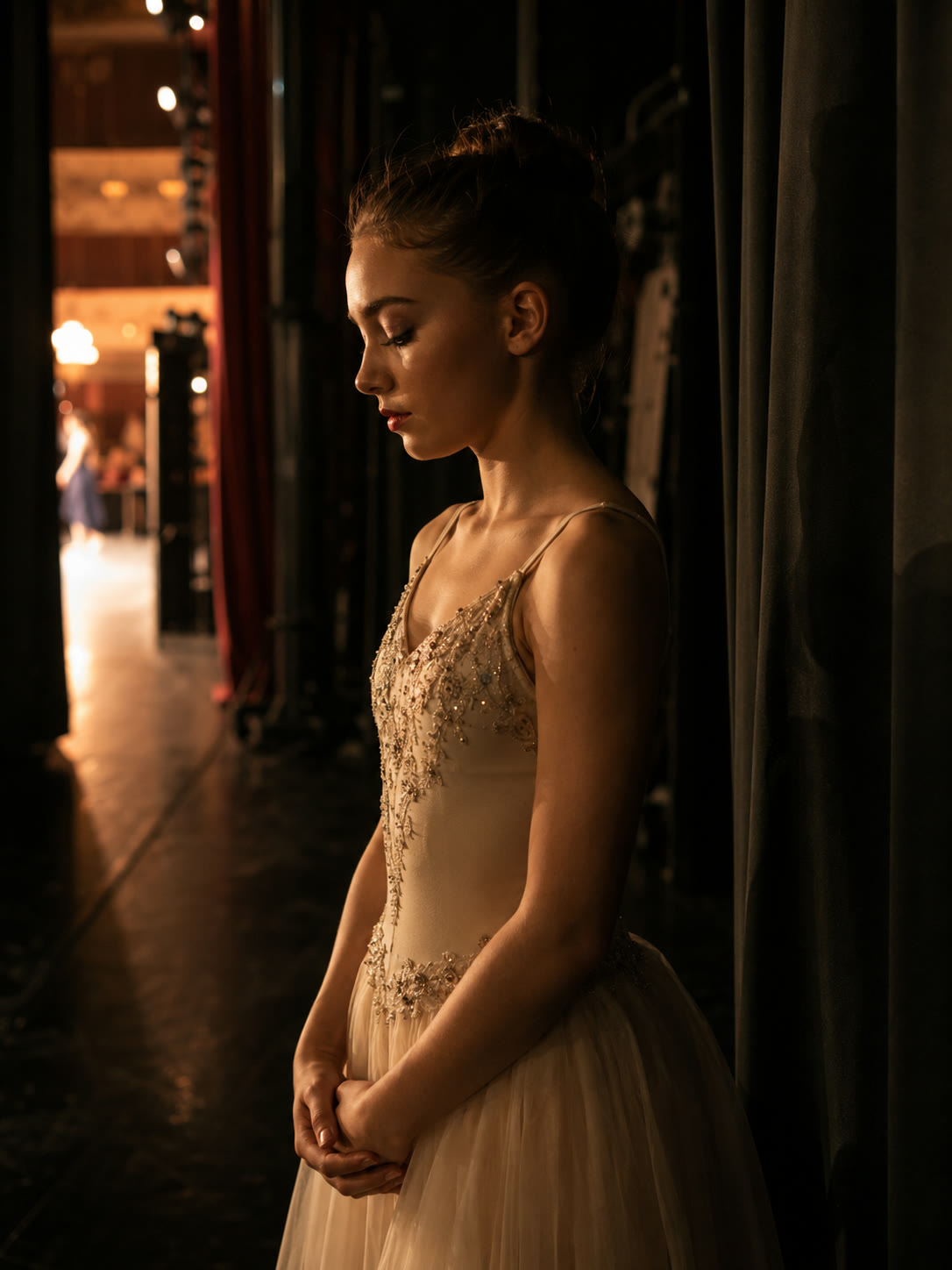
A young dancer in costume, standing in the wings of a theatre, just before going on stage
5-point plan
  1. Where & when the photo was taken
  2. What is in the foreground — describe the dancer in detail
  3. What is happening — what's the moment?
  4. Why you chose this photo to show your friend
  5. What you feel when you look at it
tap to start preparation --:--
Sample answer (open AFTER you've tried it yourself!)
I've chosen this photo because it captures a moment I find really powerful. It looks like it was taken backstage, just before a live performance — probably in a theatre, late in the evening, judging by the soft lighting. In the foreground we can see a young dancer in full costume. She is standing very still, almost as if she's holding her breath. Her hands are clasped in front of her — a classic gesture of someone trying to calm their nerves. What is happening is the moment right before she steps on stage — those final seconds when everything you've rehearsed has to come together. You can almost feel the silence. I decided to share this photo with you because I know how much you love the theatre, and I think this image captures something words can't — the private second before the public one. When I look at it, I feel a mix of admiration and a little bit of stage fright myself. It reminds me that behind every performance there's a human being who is just as nervous as we would be.
7

Speaking Task 4 · Compare TWO photosHigh level · 10 points

Project work · 2.5 min prep · 3 min talk · 6 points to cover
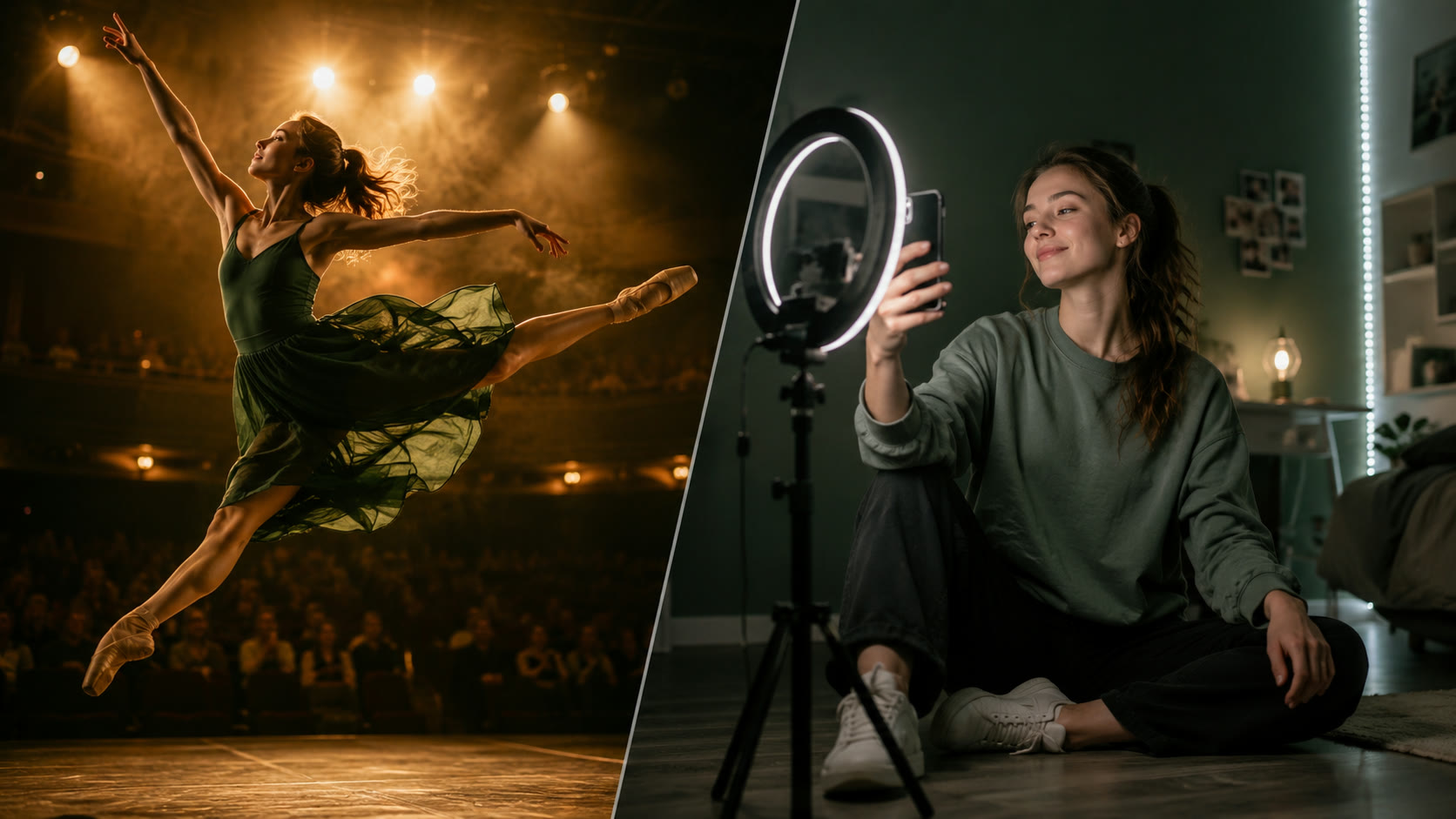
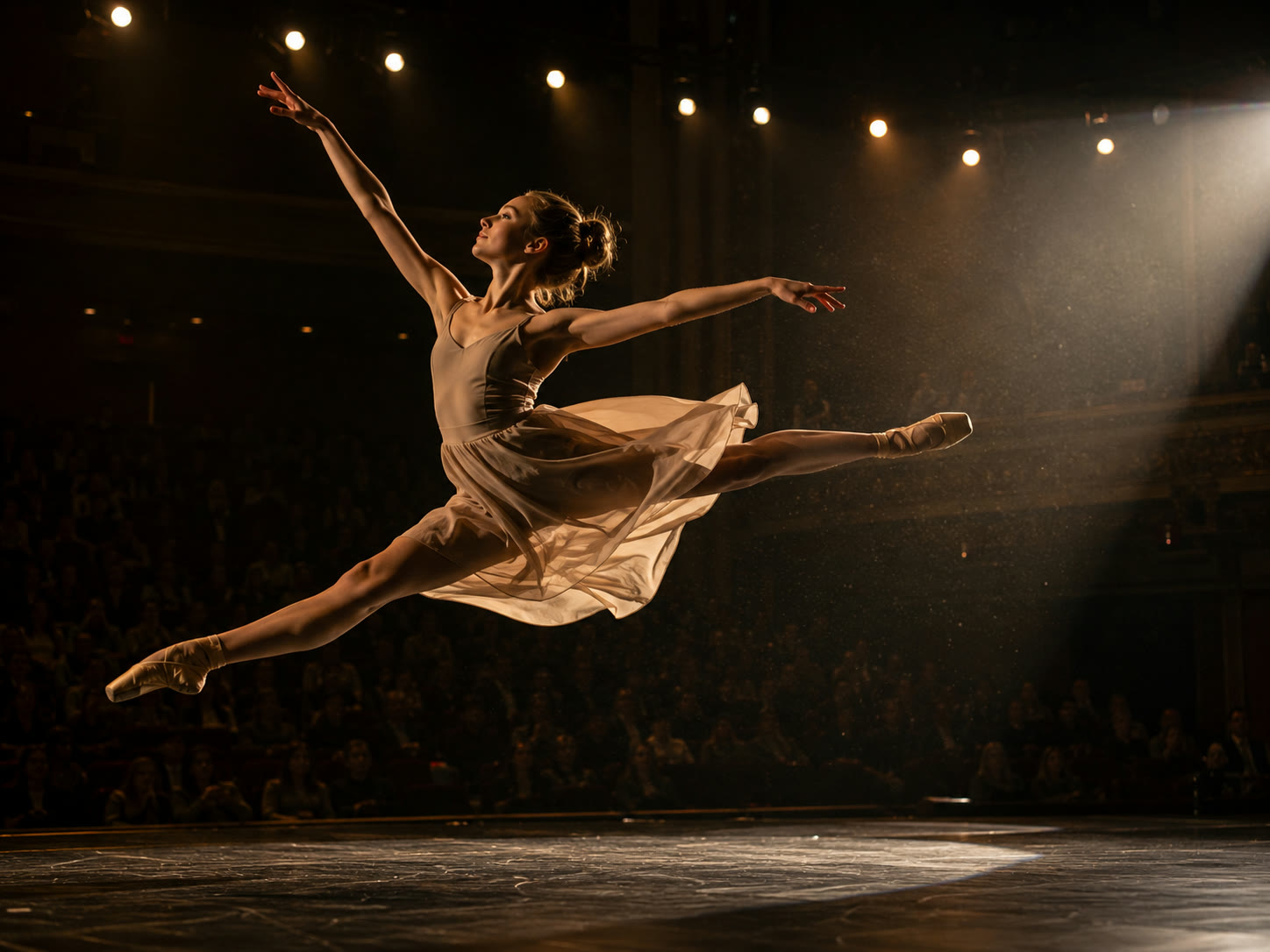
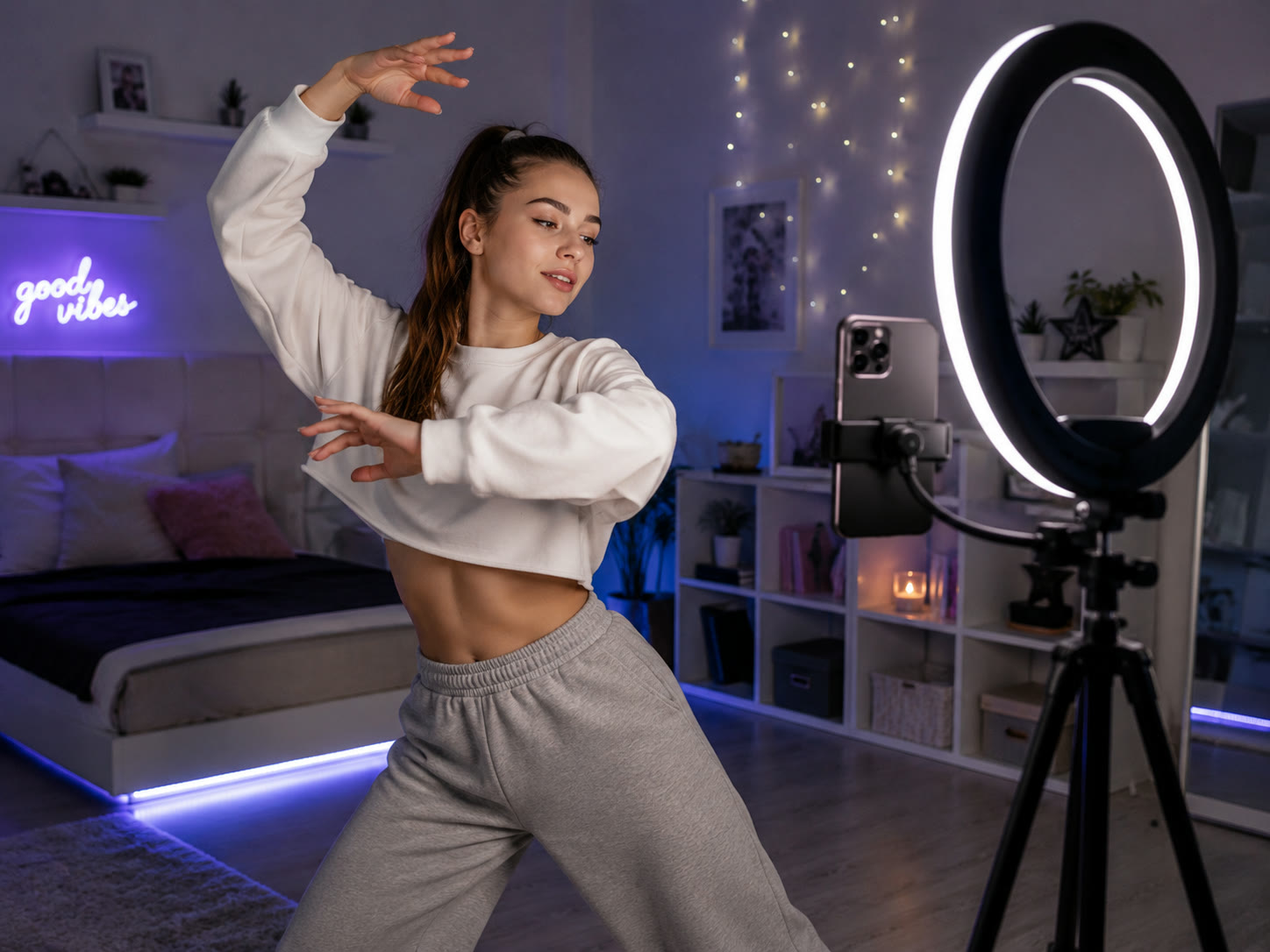
Topic mood board: a young dancer mid-leap on a real theatre stage on the left, a young dancer sitting on the floor of her bedroom filming a video with a ring light on the right
Mood board · two worlds of one art

Project topic: "Live performance vs. social media: how do young artists today choose where to share their talent?"

You've found these two photos for the project. Imagine you're recording a voice message to your project partner.

Photo A: A dancer performing live on a real stage with audience in the dark
Photo A · Stage
Photo B: A dancer filming a short video at home with a ring light
Photo B · Screen
6 obligatory points
  1. Brief description of each photo (2 sentences each, link to project)
  2. Differences (2 key contrasts)
  3. Advantages of each (1-2 each)
  4. Disadvantages of each (1-2 each)
  5. Which one you'd prefer — and why
  6. Conclusion tying back to the project topic
tap to start preparation --:--
Full sample answer with linkers (open AFTER you've tried it!)
Hi! I've found two great photos for our project on «Live performance vs. social media», and I'd like to share my thoughts on them. The first photo shows a young dancer in the middle of a performance on a real stage. The audience is in the dark, and all the lighting is on her — a classic theatre moment. The second photo shows a dancer at home, filming a short clip with a ring light, presumably for social media. Both photos illustrate the topic perfectly because they show the two main «stages» a young artist can choose today. In terms of differences, the most obvious one is the audience: in the first photo, the audience is physically present, while in the second one, the audience is virtual and invisible to the performer. Another important difference is preparation: a stage show takes weeks of rehearsal, whereas a viral clip can be made in an afternoon. Speaking of advantages, performing live builds real-time connection with people and develops resilience under pressure. The screen, on the other hand, offers far greater reach — a single video can be seen by millions, which would be impossible in any theatre. However, both have drawbacks too. Live performances are limited to one city and one night, and stage fright can be brutal. Online content, in turn, is forgotten very quickly, and the algorithm doesn't care how talented you are if your first three seconds don't hook the viewer. If I had to choose, I'd personally prefer the stage. The energy of a live audience is something a screen cannot replicate, and I believe artistic depth grows from those high-stakes moments. To conclude, both formats are valid, but they shape very different kinds of artists — and the smartest performers of our generation are probably the ones who learn to live in both worlds.

AI Live Coach · record yourself and get instant feedback

Tap Start recording and answer the project task aloud. As you speak, the system checks the criteria the examiner is checking — in real time. Re-record as many times as you want. Nothing leaves your browser.

⚠️ Live speech recognition is not supported in this browser. Open in Chrome or Edge on desktop for the full coach. You can still type your answer below.

Criteria checklist · real-time

  • Project topic mentionedstage / screen / live performance / social media+1
  • Photo A described"in the first photo…" + concert/stage+1
  • Photo B described"in the second photo…" + phone/ring light+1
  • Two differenceshowever / whereas / in contrast / unlike+1
  • Advantages mentionedadvantage / benefit / strength / allows+1
  • Disadvantages mentioneddisadvantage / drawback / downside+1
  • Preference + reason"I'd prefer / I'd choose…" + because+1
  • Conclusionto conclude / in summary / overall+1
--:-- tap to start · 3:00 max
Words0
Pace · wpm--
Linkers used0
B2+ vocab0
Longest pause0s
Predicted score
/ 10
Press Start and read the 6-point plan above out loud. Don't stop for 3 minutes.
Mic doesn't work? Type your answer instead
8

Phrasal verbs · the stage and the screenLexical drill

10 high-frequency phrasal verbs · learn the meaning · then fill the gaps

Each row shows the phrasal verb, its meaning, and an example. Tap any word to hear it.

Now fill the gaps with the right phrasal verb

Use the correct form (tense, person). One per sentence.
9

Self-check · Task 4 criteriaMaximum 10 points

Tick each box after you re-listen to your recording

K1 · Решение коммуникативной задачи (max 4)

K2 · Организация высказывания (max 3)

K3 · Языковое оформление (max 3)

Top 5 traps to watch for:
  1. Spelling — особенно «-ity», «-ence/-ance», double letters (successful, beginning)
  2. Word class — «success» vs «successful» vs «successfully» в word formation
  3. Wrong tense в речи под давлением — повторяем «would» в опциях, «had» в past wishes
  4. Skipping intro/conclusion в Task 4 — каждое = минус балл
  5. Repeating linkers («also, also, also») — bank: however / in contrast / on the other hand / speaking of / in terms of / what's more
10

What is contemporary art?Listening · 44 sec

A short closing video to widen the topic · watch and reflect

Quick reflection — don't write, just speak:

What is the oldest example of art you can name?
And the newest form of art you have seen online?
What do you think art should do — comfort us or shake us?