Walk through the updated 2025 TOEFL iBT exactly as it is in the official ETS overview. All four sections — Reading, Listening, Writing, Speaking — with real sample tasks, real scoring, and real rubrics. By the end of 90 minutes you will know what each task wants from you, what the examiner is scoring, and where to start your preparation.
Level
B1+ / B2 entry
Duration
~90 minutes
Test time
< 2 hours
New band scale
1 – 6 (CEFR aligned)
01
What the updated TOEFL test measures
The updated TOEFL iBT assesses the four language skills — reading, listening, writing, speaking — and gives universities a reliable picture of your English in academic and campus-life contexts. Tasks are drawn from textbooks, newspapers, websites, lectures, announcements, emails and online discussions — short but authentic.
The test takes under two hours in total. It can be taken at home or at a test centre. Official scores arrive within 72 hours.
Two things to remember about the format
Reading and Listening are multistage adaptive. Your performance on the first part decides the difficulty of the second part — the test fits itself to your level.
Order is fixed: Reading → Listening → Writing → Speaking. You cannot go back to a previous section.
Why this matters: on test day you can't return to a section once it is closed. Plan your energy — Reading and Listening burn focus; Writing eats your hands; Speaking comes last when you are tired. In practice we will mirror that order.
Source · ETS Updated TOEFL iBT Test Overview (2025)
02
The four sections at a glance
Numbers and task types straight from the ETS overview table.
Reading
50 items · 30 min
Reading section · multistage adaptive
Short academic texts and everyday written sources — posters, menus, news, social media, schedules, invoices, emails. The questions check vocabulary, sentence-level form and overall comprehension.
Complete the WordsRead in Daily LifeRead an Academic Passage
Listening
47 items · 29 min
Listening section · multistage adaptive
Short spoken exchanges, full conversations, public announcements and academic talks. Speakers have accents from North America, the UK and Australia. The test checks both literal understanding and inference.
Listen and Choose a ResponseListen to a ConversationListen to an AnnouncementListen to an Academic Talk
Writing
12 items · 23 min
Writing section
Three task types reproduce real-world writing situations: assembling cued sentences, drafting a polite email, and posting in an online academic discussion.
Build a SentenceWrite an Email (7 min)Write for an Academic Discussion (10 min)
Speaking
11 items · 8 min
Speaking section
Comes last. Two task families: a controlled Listen and Repeat drill that measures pronunciation and rhythm, and a free Interview where you describe experiences and defend opinions.
Listen and Repeat (7 sentences)Take an Interview (4 questions · 45 sec each)
2b
Key vocabulary — tap a card to flip
16 essential exam-specific words. Tap each card to see the meaning and an example. We'll use these terms throughout the lesson.
assess
verb
to evaluate / measure ability
The test assesses four skills.
multistage adaptive
adj
test changes difficulty by your level
Reading is multistage adaptive.
inference
noun
conclusion not stated directly
Make an inference from the text.
passage
noun
a piece of text on a topic
Read the academic passage.
fluency
noun
smooth, easy speaking pace
Speaking is scored on fluency.
intelligible
adj
clear enough to be understood
Speech must be intelligible.
response
noun
an answer or reply
Choose the best response.
elaboration
noun
developing ideas with detail
Examiners reward elaboration.
register
noun
formality level of language
Use a semi-formal register.
cohesion
noun
how ideas link together
Use linking words for cohesion.
rubric
noun
scoring guide / criteria
Check the writing rubric.
band score
noun
level on a numbered scale
Target a band 4.5 overall.
authentic
adj
real, from genuine sources
Authentic texts from real life.
prompt
noun
question or task to respond to
Read the writing prompt twice.
proctor
noun
person supervising the exam
A human proctor watches you.
threshold
noun
minimum required score
Bocconi's threshold is 105.
recognize
verb
узнавать
I recognized her voice immediately.
consider
verb
считать, рассматривать
I consider this option the best.
captivated
adj
очарованный, захваченный
I was totally captivated by the film.
fascination
noun
очарование, сосредоточенность
Hard fascination causes mental fatigue.
effortless attention
phrase
внимание без напряжения
Soft fascination uses effortless attention.
effort
noun
усилие
No special effort is required.
fatigue
noun
усталость
Hard focus causes mental fatigue.
cause
verb
вызывать (причинять)
Stress causes irritability.
intensely focused
phrase
сильно сосредоточенный
The mind is intensely focused on the screen.
distracted
adj
рассеянный, отвлечённый
You might find yourself easily distracted.
irritable
adj
раздражительный
After mental fatigue you feel irritable.
engage
verb
вовлекать (задействовать)
Soft fascination engages a different brain network.
soothe
verb
успокаивать
A walk in the park soothes the mind.
certain
adj
уверенный, определённый
I am certain about my answer.
submissions
noun pl
отправленные работы (на конкурс/публикацию)
Could you confirm if you received my submissions?
Flipped0/ 31
03
Reading I · Complete the Words
Paragraph-length academic text (~70–100 words). After the intact first sentence, the second half of every second word is deleted. Restore the missing letters.
ETS sample task · 10 gaps
Fill in the missing letters in the paragraph below. The first sentence is given intact.
We know from drawings that have been preserved in caves for over 10,000 years that early humans performed dances as a group activity.
We mi
think th
prehistoric peo
concentrated on
on ba
survival. How,
it i
clear fr
the rec
that dan
was important to them. They recorded more drawings of dances than any other group activity. Dances served various purposes, including ritualistic communication with the divine, storytelling, and social cohesion.
Strategy: read the whole paragraph first to catch the topic, then fill gaps in context. The missing letters always finish a real English word — say each candidate aloud.
Score0/ 10
04
Reading II · Read in Daily Life
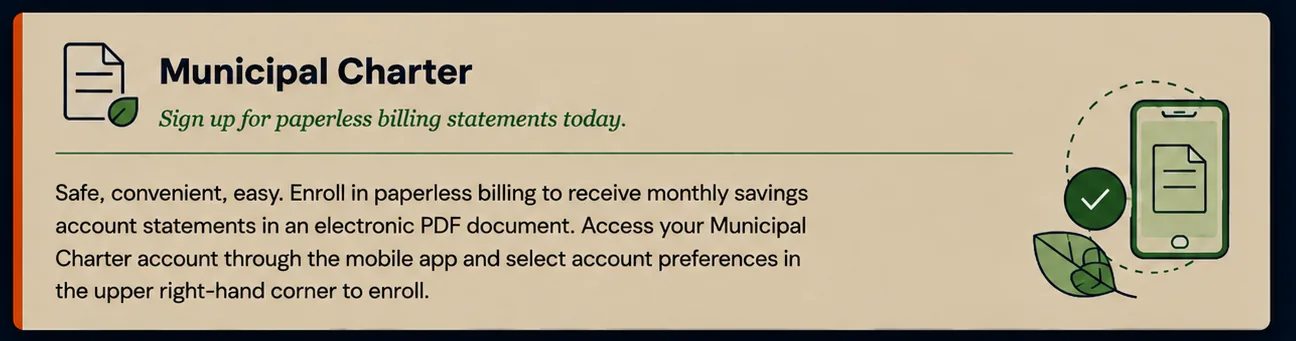
Short non-academic text (15–150 words) from everyday life — notice, advert, menu, email, receipt — followed by 2–3 multiple-choice questions.
ETS sample task
Read the notice, then answer the question.
1. What type of business issued the notice?
→ Keywords: "savings account statements". Only banks issue those.
Strategy: Read in Daily Life is about scanning, not deep reading. Find the function-word that names the document type — statement, invoice, receipt, schedule, ad — and the answer follows.
Score0/ 1
05
Reading III · Read an Academic Passage
~200-word expository text from history, art, science, business, etc. Five multiple-choice questions on factual detail, vocabulary, inference, and rhetorical structure.
ETS sample task · Mirror Test
The Mirror Test
Very young children cannot recognize themselves in a mirror; they usually achieve this milestone around 18 months of age. The ability to recognize oneself in the mirror is considered to be a key component of self-awareness and consciousness for humans. But what about animals?
For many years, scientists have known that members of the great ape family could recognize themselves in mirrors. They measured this by the "mirror test," which involved putting a colored mark on an ape's body, and then showing the ape its reflection in a mirror. If the ape tried to remove the mark on its own body, the scientists knew that the ape was recognizing its reflection.
Apes are close relatives of humans, but in recent years, scientists have discovered that other animals also pass the "mirror test." Elephants and dolphins have shown signs of self-recognition. These, like apes, are highly intelligent animals. But in a more recent experiment, a type of fish called the cleaner fish tried to scrape a mark off its body when it saw itself in the mirror. This suggests that even less intelligent animals may possess more self-awareness than previously suspected.
ETS Reading · academic passage format
1. Why did scientists put colored marks on animals' bodies?
→ Direct restatement of the text: "If the ape tried to remove the mark on its own body, the scientists knew that the ape was recognizing its reflection."
2. Which idea is the passage building toward at the end?
→ Final sentence is the rhetorical punchline: "even less intelligent animals may possess more self-awareness than previously suspected." Main-idea questions follow the last paragraph's "this suggests…" move.
Strategy: Academic Passage rewards structural reading. Sentence 1 of each paragraph is usually the claim; the rest is support. End-of-passage sentences carry the main idea.
Score0/ 2
06
Listening I · Listen and Choose a Response
You hear a short question or statement. You read four possible responses. Pick the most appropriate one — testing both literal and implied meaning.
ETS sample task
▶ Audio
You hear:"Didn't I just see you in the library an hour ago?"
1. Choose the best response.
→ The opening is an indirect question — really "what were you doing there?" Answer A directly addresses the implied question with a reason. B treats it as a library-help question (wrong frame). C and D miss the topic entirely.
Strategy: Listen and Choose is about social register. The right answer matches the speaker's mood, role and intention — not just the surface words.
Score0/ 1
07
Listening II · Listen to a Conversation
A short conversation between two speakers. Listen for main idea, key details, inferred meaning and speaker purpose. Two questions follow.
ETS sample task · supermarket / play
Tap ▶ to listen. Try the question below first — only then open the script to verify.
▶ Conversation
📜 Open conversation script
Woman: Need anything from the supermarket?
Man: Huh? Aren't we getting ready to go see that play in a few minutes?
Woman: That's tomorrow.
Man: Oh. Wow, I'd forget my head if it wasn't screwed on… Guess I don't need to change my clothes after all.
Woman: So, you weren't planning to prepare dinner?
Man: No, but I can. What do you want?
Woman: Just something light and healthy. So, can you go shopping instead?
Man: Yeah, sure. How about salmon and salad? Want anything else?
Woman: No, that's good. Thanks!
1. What does the woman imply she was about to do?
→ "Need anything from the supermarket?" is offered as she's about to leave for the supermarket. The man then volunteers, and she accepts ("So, can you go shopping instead?").
Strategy: Conversation questions love implied answers. Don't pick the literal first option — pick the one that explains why the speaker said what they said.
Score0/ 1
08
Listening III · Listen to an Announcement
Short academic-related announcement (~40–85 words) — classroom, event, schedule, rule. Questions test main idea, detail and speaker purpose.
ETS sample task · guest lecture announcement
▶ Announcement
Transcript
Good afternoon, everyone. I am excited to inform you that Dr. Cynthia Palmer, a renowned expert in environmental science, will be giving a guest lecture next Monday at 2 P.M. in Waldman Auditorium. Dr. Palmer will discuss the latest advancements in sustainable energy solutions and their impact on global climate change. Due to her popularity and the high interest in her work, I highly recommend arriving early to secure a seat.
1. What is the announcement about?
→ Main-idea question: the announcement's topic sentence says it plainly — "Dr. Cynthia Palmer… will be giving a guest lecture."
Strategy: Announcements have a clear structure: topic → who/when/where → action item. The first 5 seconds usually carry the topic. Catch that and the rest is detail.
Score0/ 1
09
Listening IV · Listen to an Academic Talk
~100–250-word academic talk on art, history, science, business etc. Four questions on main and supporting ideas, organisation, inference, vocabulary.
ETS sample task · podcast on psychology · hard / soft fascination
▶ Academic talk
Transcript
Did you see that new thriller movie that came out last week? I did and loved it. The action, the plot twists… I was totally captivated. Time just flew by. Not a single thought occurred to me that was unrelated to the movie. What I experienced is what psychologists call hard fascination. Hard fascination means intense focus and concentration. Whether it's TV programs, video games… hard fascination is all too easy to come by in this modern world.
There's another type of fascination — soft fascination. There's still effortless attention, meaning that no special effort is required for you to stay focused, but there's still room for other thoughts. When I take a walk in the park and look at the flowers and trees, for example, I might be thinking in the back of my mind about my dinner plans.
Now, one thing to know is hard fascination causes mental fatigue. The mind is so intensely focused that it gets tired fast. What follows mental fatigue? You might find yourself easily distracted, irritable, and stressed. Soft fascination, in contrast, engages a different part of the brain — the DMN, or Default Mode Network, which soothes the mind and helps combat mental fatigue. So next time you feel like your mind is on overload, turn off the TV, put down your phone. Take a walk, or simply sit and stare at the clouds.
1. Why does the speaker mention a movie?
→ The movie is a hook, not the topic. The speaker uses it to introduce the term hard fascination. "Speaker purpose" questions reward that interpretation.
2. What is the main contrast in the talk?
→ The two key terms are introduced as a pair, then contrasted on mental fatigue. That pair IS the main idea.
Strategy: For academic talks, listen for the "two-term move" — when a speaker introduces a paired contrast (X vs. Y), that contrast is almost always the question target.
Score0/ 2
10
Writing I · Build a Sentence
You see one intact sentence followed by a sentence with words in scrambled order. The two sentences form an exchange. Reorder the words to make a grammatical reply that fits the context.
ETS sample task
Intact sentence: What was the highlight of your trip?
Build the reply:
The__________________fantastic.
Sample answer: The tour guides who showed us around the old city were fantastic. Note: "were" — plural subject (guides), not "was". "Was" is a distractor.
Strategy: Build a Sentence tests sentence-level grammar under time pressure. Find the subject first → match the verb (singular/plural) → place the relative clause "who/which" between the noun and verb.
Score0/ 1
11
Writing II · Write an Email
A scenario in academic or social setting. Write a multi-sentence email that achieves a clear communicative goal — recommend, invite, propose, request. 7 minutes.
ETS sample task · poetry magazine
Scenario
A new poetry magazine has asked its readers for submissions, and you decided to submit two of your poems. However, you had a problem using the online submission form, and you are not certain that your submissions were received.
Write an email to the editor. In your email:
Tell the editor what you like about the new magazine.
Describe the problem you experienced.
Ask about the status of your submissions.
To: editor@sunshinepoetrymagazine.com · Subject: Problem using submission form
Target: 80–130 words · semi-formal · all three bullets coveredwords: 0
Hi Editor,
I hope you are well! I wanted to say that I really love the new Sunshine Poetry Magazine. It's refreshing to see such a diverse range of voices, and the layout is very engaging. However, I had some trouble with the online submission form when I tried to submit two of my poems. After I uploaded the files and hit submit, the page just kept loading and loading, and eventually, I wasn't sure if my poems were successfully sent. Could you please confirm if you received my submissions? I'm really excited to be a part of your magazine and would appreciate any help you can provide to fix this issue. Looking forward to your response.
Best regards.
Strategy: Address the bullets in order. Open with politeness (one sentence), then bullet 1 → bullet 2 → bullet 3, then a polite sign-off. Examiners look for this exact shape.
Tutor score/ 5
12
Writing III · Write for an Academic Discussion
Online class forum: a professor opens a topic and asks a question; two students reply with different positions; you add your own substantial response. 10 minutes · at least 100 words.
ETS sample task · volunteerism
Dr. Achebe — professor
Volunteerism refers to the act of offering your time and service without financial compensation to benefit a community, organization, or cause. While many people volunteer mainly to help others, some institutions have mandatory volunteer programs. High schools are one example, where students may be required to complete a certain number of volunteer hours to graduate. What do you think? Should high school students be required to do volunteer work? Why or why not?
Claire — student
Yes, I think high schools should require volunteer hours because it helps students build a sense of civic responsibility. Many teenagers don't naturally think about helping others, and this requirement can introduce them to the idea that their time and effort can make a real difference in the lives of others.
Andrew — student
I don't think volunteer hours should be required because many students already have limited free time. Some have part-time jobs or take care of younger siblings after school. Adding a mandatory volunteer requirement could create extra stress and make it harder for those students to balance their existing responsibilities.
Target: 100+ words · take a position · address Claire or Andrew · give a concrete examplewords: 0
While I get Andrew's point about limited free time, I think it's good to have mandatory volunteer hours at high schools. Volunteering teaches students empathy and community service, helping them grow into responsible adults. Schools can give flexible options that fit students' schedules, like weekend or summer volunteering. What's more, volunteering can be a break from academic pressure, allowing students to engage in meaningful activities outside school. For example, last summer I volunteered to help create a community garden and the experience was both fulfilling and educational. I helped beautify the neighborhood and in the process of doing so, I learned how to grow vegetables and made some new friends. The potential benefits of volunteering clearly outweigh the time-constraints involved.
Strategy: The shape that scores 5: acknowledge classmate → take position → reason 1 → reason 2 → specific example → wrap-up. Examiners count the "specific example" as a separate scoring criterion.
Tutor score/ 5
13
Speaking I · Listen and Repeat
You hear seven sentences in a scenario. You repeat each one exactly. Sentences get longer and more complex. 8–12 seconds per response. Mic drill below uses your browser's speech recognition — it shows you what was heard.
ETS sample task · welcoming visitors at a zoo
"You are learning to welcome visitors to the zoo. Listen to your manager and repeat what she says. Repeat only once."
▶ Manager (full set, 7 sentences)
Drill it sentence by sentence
1. We have a variety of wildlife.
2. Bears, wolves, and large cats are to the right.
3. You can find sea lions and elephants further down the path.
4. Please, no outside food or drinks, and do not feed the animals.
5. Avoid banging or tapping on the displays and enclosures.
6. For those with children, we offer summer camps and educational opportunities.
7. The visitor's center, located near the front entrance, can give you more information.
Mic-drill works in Chrome / Edge. Allow microphone access on first record.
Strategy: Listen and Repeat scores on accuracy + intelligibility. Don't speed up. Don't drop articles ("the", "a"). Keep your sentence stress pattern — heavy on content words, light on grammar words.
Mic-match0/ 7
14
Speaking II · Take an Interview
A simulated interview with a pre-recorded researcher. Four questions on factual/personal experience and opinion. 45 seconds per answer.
ETS sample task · research study on urban life
"You have agreed to take part in a research study about urban life. You will have a short online interview with a researcher. The researcher will ask you some questions."
▶ Researcher · 4 questions
Q1 · personal experience
Think back to the last time you visited a city in your country — a city that you didn't live in. Why did you travel to that city? What did you like about that city?
Q2 · self-reflection
Cities affect people in different ways. Some people find cities dynamic and exciting. Others find that cities are overwhelming and drain them of energy. What kind of reaction do you have to cities? Why do you think you react in this way?
Q3 · opinion
Some people believe that those who live in cities lead more interesting lives. They would argue, for example, that people who live in cities have more access to professional opportunities and interesting leisure activities. Do you agree that people who live in cities lead more interesting lives? Why or why not?
Q4 · policy opinion
For some time now, researchers have been interested in whether green spaces, such as parks, make people who live in cities happier. Do you think that city governments should create more parks in urban areas to promote a general sense of happiness and life satisfaction? Why or why not?
Target: ~45 sec per answer · 4 short paragraphs · clear opinion + 1 example eachwords: 0
Q1. The last time I visited a city was Delhi. I went there to visit my friend who is living there. I really liked the historical places, like Red Fort and the Qutub Minar. There was a lot of cultural activities going on. The food was also amazing, especially the street food. I enjoyed the busy atmosphere and the way it mixes the old and the new buildings.
Q2. I usually feel excited and kind of energized in cities. I think it's because there's always something happening, and there's so many people around. It makes me feel like I'm part of a big community. I also love the variety of things to do and see. Sometimes it gets a bit tiring, but overall, I like the dynamic environment.
Q3. I agree that people in cities live more interesting lives. There's more access to professional opportunities and fun activities. You can meet many different kinds of people and learn a lot of new things. The city has cultural events, nice restaurants, and different kinds of places to visit. I think it makes life more exciting.
Q4. I think city governments should really try to create more parks. Parks provide green space where people can relax and feel a bit more calm or happy. They're also good for physical activities — like jogging or doing yoga — and for meeting friends. In a busy city, it's really helpful to have these quiet areas to get away from the noise and stress. I think it definitely helps improve people's overall well-being and just makes the city better.
Strategy: Use the Situation · Action · Result · Reflection (SARR) frame for Q1. For Q2–Q4 use position → reason → example → wrap. Filler "um/uh" is fine — natural speech beats stiff sentences.
How scoring works. Auto-tasks (MCQ, gap-fill, builder, mic-drill) count each correct as 1 point. Tutor-tasks (email, discussion, interview) — Maria fills the score 0–5 / 0–4 by rubric. The total maps to the band 1–6 and CEFR level by Table 2 from sec 15. Auto-saved. ↺ Reset progress button at bottom-right.
15
Scoring — the new 1–6 banded scale
From 2025, TOEFL replaces the old 0–30 / 0–120 scale with a banded 1–6 scale aligned to CEFR. The overall score is the average of the four section bands.
Reading
1 – 6
raw 0–30 mapped
Listening
1 – 6
raw 0–30 mapped
Writing
1 – 6
raw 0–20 mapped
Speaking
1 – 6
raw 0–55 mapped
Overall
1 – 6
average of 4 bands
Mapping to CEFR levels
CEFR
Reading
Listening
Writing
Speaking
Overall
C2
6
6
6
6
6
C1
5 – 5.5
5 – 5.5
5 – 5.5
5 – 5.5
5 – 5.5
B2
4 – 4.5
4 – 4.5
4 – 4.5
4 – 4.5
4 – 4.5
B1
3 – 3.5
3 – 3.5
3 – 3.5
3 – 3.5
3 – 3.5
A2
2 – 2.5
2 – 2.5
2 – 2.5
2 – 2.5
2 – 2.5
A1
1 – 1.5
1 – 1.5
1 – 1.5
1 – 1.5
1 – 1.5
Score concordance · new bands ↔ old scale
Band
R (0–30)
L (0–30)
W (0–30)
S (0–30)
Overall (0–120)
6
29 – 30
28 – 30
29 – 30
28 – 30
114+
5.5
27 – 28
26 – 27
27 – 28
27
107+
5
24 – 26
22 – 25
24 – 26
25 – 26
95+
4.5
22 – 23
20 – 21
21 – 23
23 – 24
86+
4
18 – 21
17 – 19
17 – 20
20 – 22
72+
3.5
12 – 17
13 – 16
15 – 16
18 – 19
58+
3
6 – 11
9 – 12
13 – 14
16 – 17
44+
2.5
4 – 5
6 – 8
11 – 12
13 – 15
34+
2
3
4 – 5
7 – 10
10 – 12
24+
1.5
2
2 – 3
3 – 6
5 – 9
12+
1
0 – 1
0 – 1
0 – 2
0 – 4
0+
MyBest scores: Your report shows your highest section scores in any test administration within the last 2 years — averaged into a "MyBest" overall band. Many universities accept this combined score.
Typical thresholds for management / business programmes (old 0–120 scale, still common in admissions): 78 entry-level acceptance · 87–95 competitive · 100+ top schools (Bocconi asks 105). On the new band scale that's roughly 4.0 → 4.5 → 5.0.
16
Scoring Guides · Writing (0 – 5)
Both Write an Email and Write for an Academic Discussion are scored 0–5 with parallel rubrics. Here's what the examiner is looking for.
Write an Email
5
Fully successful
Effective, clearly expressed, consistent facility with language.
Elaboration that effectively supports the communicative purpose
Effective syntactic variety and precise, idiomatic word choice
Appropriate social conventions (politeness, register, request formulation)
Almost no lexical or grammatical errors
4
Generally successful
Mostly effective and easily understood. Adequate language facility.
Adequate elaboration; mostly appropriate social conventions
Syntactic variety and appropriate word choice
Few errors
3
Partially successful
Generally accomplishes the task. Limitations may prevent parts of the message from being fully clear.
Partial elaboration; moderate range of syntax and vocabulary
Some noticeable errors in structure, word forms or social conventions
2
Mostly unsuccessful
Attempts the task but is mostly ineffective. Message limited or hard to interpret.
Limited or irrelevant elaboration; limited range of syntax/vocabulary
Accumulation of errors
1
Unsuccessful
Ineffective attempt; message may be unintelligible.
Very little elaboration · telegraphic language · serious frequent errors
Minimal original language
0
No score
Blank · rejects the topic · not in English · entirely copied from the prompt · arbitrary keystrokes.
Write for an Academic Discussion
Same 0–5 banding. A band-5 response shows relevant, well-elaborated explanations, exemplifications or details · effective syntactic variety · precise, idiomatic word choice. The discussion is judged on contribution to the forum, not on agreement with the professor.
Why this matters: Both Writing rubrics reward elaboration — they specifically score whether your supporting examples and reasoning are relevant and developed, not whether you write more words. Two strong examples beat four shallow ones.
16b
Past Tenses · targeted drill — три зоны направленной отработки
Эта секция собрана по результатам прошедшей самостоятельной работы. Три маркерные конструкции, в которых чаще всего возникают ошибки в Past, плюс мини-карточки неправильных глаголов. Цель — автоматизация в продуктивной речи.
① Маркер «ago» — обязательное Past Simple
Наречие ago однозначно требует Past Simple. Сочетание ago + Present Perfect грамматически некорректно.
1. The report ___ five minutes ago.
→ «ago» + V2 → Past Simple (arrived).
2. They ___ the contract two hours ago.
→ «ago» → Past Simple (signed).
3. The CFO ___ to Singapore three weeks ago.
→ «ago» → Past Simple (flew).
4. We ___ the email a minute ago.
→ «ago» → Past Simple (sent).
5. I ___ to that conference six months ago.
→ «ago» → Past Simple (went).
6. Our team ___ that pilot project two years ago.
→ «ago» → Past Simple (launched).
7. The bank ___ that policy a few months ago.
→ «ago» → Past Simple (changed).
8. The client ___ us this requirement ten minutes ago.
→ «ago» → Past Simple (told).
② Конструкция «While + V-ing» — Past Continuous (фон) + Past Simple (прерывание)
Союз while требует Past Continuous (was / were + V-ing) для длительного фонового действия. Прерывающее действие — Past Simple.
1. While I ___ to the office, my phone rang.
→ While + V-ing → Past Continuous (was walking).
2. While she ___ the labelling, the system crashed.
→ Past Continuous (was checking).
3. While we ___ the report, the manager came in.
→ Past Continuous фон (were discussing) + Past Simple прерывание (came).
4. While he ___ for the bus, it started to rain.
→ Past Continuous (was waiting).
5. While the team ___ the presentation, the projector died.
→ Past Continuous (was preparing) — длительный фон.
6. While I ___ at that company, I learned a lot about logistics.
→ While + V-ing → Past Continuous (was working).
7. While they ___ the documents, I made some coffee.
→ Past Continuous (were reviewing).
8. While my colleague ___ the call, I took the minutes.
→ Past Continuous (was leading) — фон.
③ Past Simple при описании завершённого периода («когда я был…»)
Если контекст описывает завершённый отрезок прошлого («когда я был студентом», «в школе я…»), используется Past Simple, а не Present.
1. When I was a student, I ___ as a tutor on weekends.
→ «When I was…» → Past Simple (worked).
2. At university we ___ a lot of group projects.
→ Завершённый период (at university) → Past Simple (did).
3. In my first job I ___ in logistics for two years.
→ «In my first job» — закрытый период → Past Simple (worked).
4. When I lived in St Petersburg, I ___ at a startup.
→ «When I lived…» — закрытый период → Past Simple (worked).
5. In 2022 we ___ in three different cities.
→ Точный год «in 2022» → Past Simple (lived).
6. During my MBA, I ___ a lot about negotiation.
→ «During my MBA» — закрытый период → Past Simple (learned).
7. At my previous company, I ___ the financial reports.
→ «At my previous company» — закрытый период → Past Simple (handled).
④ Irregular verbs · топ-20 для ежедневной отработки
Карточная отработка форм V2 / V3. Прорабатывать ежедневно 8–10 минут до устойчивого автоматизма.
V1 · base
V2 · Past Simple
V3 · Past Participle
meet
met
met
find
found
found
leave
left
left
bring
brought
brought
teach
taught
taught
think
thought
thought
choose
chose
chosen
break
broke
broken
build
built
built
catch
caught
caught
cost
cost
cost
hold
held
held
speak
spoke
spoken
drive
drove
driven
write
wrote
written
take
took
taken
give
gave
given
begin
began
begun
become
became
become
grow
grew
grown
⑤ Said vs Told — grammar trap
told требует прямое дополнение (told me / told him); said используется без дополнения или с to (said to me, said it).
1. He ___ me he was busy.
→ есть прямое дополнение «me» → told.
2. She ___ that the meeting was postponed.
→ нет дополнения, перед «that» → said.
3. The manager ___ us to wait outside.
→ есть дополнение «us» → told.
4. «I'll be late», he ___ to me on the phone.
→ конструкция «said to + person» → said.
5. My tutor ___ me the truth about the exam.
→ есть «me» → told.
6. She ___ nothing during the meeting.
→ дополнения нет → said.
⑥ -ing forms · gerund / participle / continuous
Три функции -ing: (a) gerund — V-ing работает как существительное (Reading is fun); (b) participle — V-ing в роли причастия (the man reading the book); (c) continuous — V-ing в составе времени (is reading).
1. «Reading academic texts is hard.» — функция -ing?
→ Reading = подлежащее, существительное → gerund.
2. «He is reading the brief.» — функция -ing?
→ is + V-ing → Present Continuous.
3. «The man reading the report is my boss.» — функция -ing?
→ reading = определение к «the man» → participle.
4. «I enjoy learning new languages.» — функция -ing?
→ после enjoy всегда gerund → gerund.
5. «Walking down the street, I saw an old friend.» — функция -ing?
→ обстоятельство одновременного действия → participle.
6. «She was preparing the presentation when I called.» — функция «preparing»?
→ was + V-ing → Past Continuous.
⑦ Past Tenses · определи время
Шесть предложений в смешанном порядке. Определи: Past Simple · Past Continuous · Past Perfect.
1. «Last year I attended an IELTS prep course.»
→ «last year» + V2 → Past Simple.
2. «At 9 a.m. yesterday I was checking the inventory.»
→ «at 9 a.m. yesterday» + was V-ing → Past Continuous.
3. «By Friday we had completed the whole project.»
→ «by Friday» + had V3 → Past Perfect.
4. «I was reading the contract when the phone rang.»
→ «was reading» — фоновое действие → Past Continuous.
5. «Before I joined the company, I had worked in marketing for 3 years.»
→ «had worked» — действие до другого момента в прошлом → Past Perfect.
6. «Yesterday morning I sent three follow-up emails.»
→ «yesterday morning» + V2 → Past Simple.
⑧ Vocabulary · spontaneous recall (10 type-in)
Прочитай определение и впиши слово. Без вариантов. Это зона воспроизведения без опор.
Раздел экзамена ЕГЭ/IELTS, где надо разделить задание на несколько частей.
Сфера деятельности, область специализации (banking, finance, IT…).
Делиться расходами с друзьями — to ___ the costs.
⑨ Sentence reordering · relative clauses
Длинные предложения с придаточными who / which / that. Структура: [N] + [who/which + V + …] + V + [complement]. Подбери правильный порядок мысленно, затем нажми «Show answer».
scrambled: were · the tour guides · who · showed us around the old city · fantastic
scrambled: was · the report · which · we submitted yesterday · approved
scrambled: are · the candidates · who · passed the first round · eligible for an interview
⑩ Formal email · openers and closings
Деловой регистр — фразы, которые ожидают на IELTS Writing Task 1 (General Letter) и в деловой переписке.
1. Универсальный formal opener для письма незнакомому человеку:
→ Незнакомый адресат → Dear Sir / Madam.
2. Универсальный formal closing после Dear Sir / Madam:
→ После «Dear Sir / Madam» → Yours faithfully.
3. Closing после Dear Mr Smith / Dear Ms Brown (знаешь имя):
→ Знаешь имя → Yours sincerely.
4. Стандартное начало основной части письма:
→ Деловой регистр → I am writing to enquire about…
5. Вежливый запрос информации в деловом письме:
→ Вежливый запрос → I would be grateful if you could provide…
6. Стандартная финальная фраза перед closing:
→ Стандартный pre-close → I look forward to your reply.
17
Homework + next lesson
📚 Homework — between now and the next lesson
Section 03 · Complete the Words. Do all 10 gaps in this lesson, then write 1 paragraph of your own using 3 of the academic words from the passage (cohesion, ritualistic, divine, etc.).
Section 05 · Mirror Test passage. Re-read it once a day for 3 days. Re-do the MCQs without looking. Note which question type slows you down (factual / inference / main-idea).
Section 09 · Hard / soft fascination talk. Listen twice (without transcript, then with). Then record yourself summarising the talk in 60 seconds in your own words.
Section 11 · Email. Write the poetry-magazine email under timed 7 minutes. Bring it to the next lesson — we'll mark against the rubric together.
Section 13 · Listen and Repeat. Do the zoo drill twice; record yourself on the third pass. Goal: smooth flow, no dropped articles.
Next lesson · 25 June: Present Tenses on business examples (Present Simple / Continuous / Perfect) with sentence-builder drills and a business-vocab kick-off.
After that · 29 June: Past Simple + storytelling + a B1 IELTS-style reading passage.